
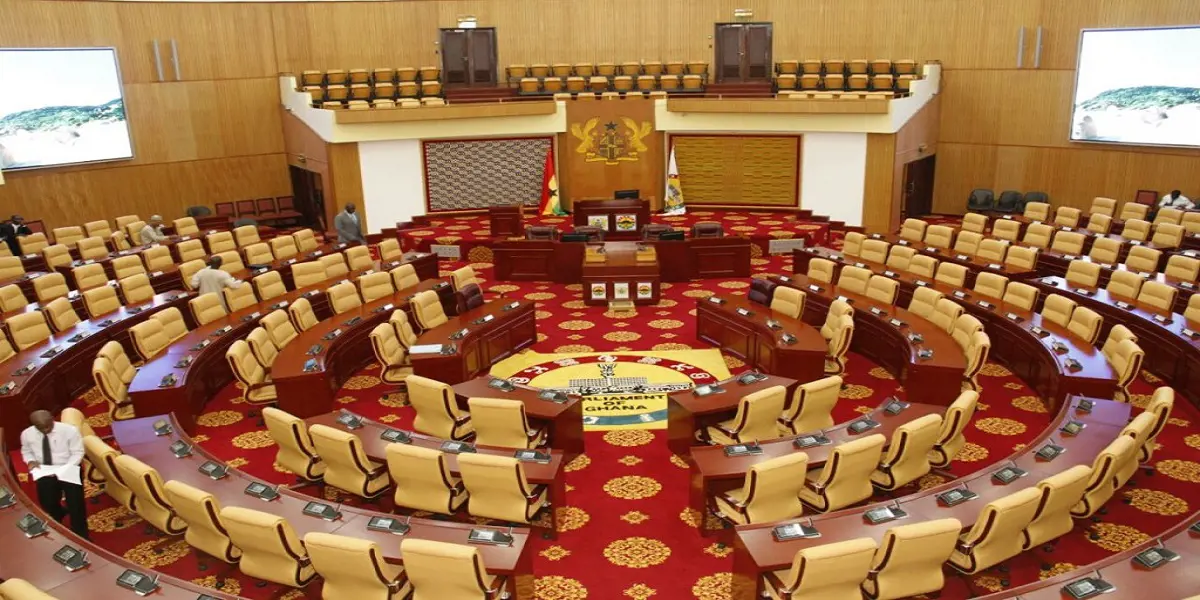
A law starts as a proposal written into a Bill. Before Parliament may even take it up, the Bill must be published in the Ghana Gazette and must come with an explanatory memorandum. Parliament then reads it, sends it to a committee, debates it, goes through it clause by clause, and votes. If Parliament passes it, the Bill goes to the President. If the President assents and the law is published in the Gazette, it comes into force. Publish, introduce, examine, debate, pass, assent, publish again. Until the end of that road, it is a Bill and not a law.
WHY THIS MATTERS TO YOU
The laws Parliament passes reach almost every part of daily life; from education and healthcare to taxes, roads, businesses, and your rights as a citizen. When a new tax law is passed, you cannot opt out of paying. The now abolished E-Levy is a practical example of this scenario.
Knowing the stages also tells you exactly how far a proposal has travelled, and that is what most false claims about Parliament get wrong. A Bill introduced is not a law. A proposal announced by a minister is not a law. A statement by one MP is not a decision of Parliament. When you can name the stage, you can check the claim.
THE STAGES
One thing to know before the stages. The stage names below - First Reading, Second Reading, Consideration Stage, Third Reading - come from Parliament's own rulebook, the Standing Orders. The current Standing Orders were adopted by a resolution of the House on 21 December 2023 and came into force on 2 January 2024. The requirements that Parliament cannot skip come from a higher source: Article 106 of the 1992 Constitution.
Stage 1: Someone decides a law is needed - but not just anyone can introduce it
A Bill is a written proposal for a new law, or for a change to a law that already exists. It sets out what is being proposed and why.
Most Bills are prepared by the government. An MP can also propose one, called a private member's Bill. But there is a limit that surprises many people. Under Article 108 of the Constitution, Parliament cannot proceed on a Bill that imposes or changes a tax, places a charge on the Consolidated Fund or other public funds, takes money out of those funds, or cancels a debt owed to the State, unless that Bill is introduced by the President or on the President's behalf.
In plain terms: an MP can propose a law, but not one that spends your taxes. Only the President can start those.
Stage 2: Publication in the Gazette, before Parliament sees it
This is the stage most explainers leave out, and it is the one that has actually brought a law down.
Article 106(2) says a Bill cannot be introduced in Parliament unless two things have happened. First, it must be accompanied by an explanatory memorandum setting out in detail the policy and principles behind it, the defects in the existing law, the remedies proposed, and why the Bill is needed. Second, it must have been published in the Gazette at least fourteen days before it is introduced.
There is one more requirement worth knowing: under Article 106(3), a Bill affecting the institution of chieftaincy cannot be introduced without first being referred to the National House of Chiefs.
Why this matters: on 28 July 2022 the Supreme Court struck down section 43 of the Narcotics Control Commission Act, 2020 (Act 1019) - the provision on licences to cultivate cannabis - by a four to three majority, because Parliament had not followed Article 106. The section was already sitting in a law that had been passed and assented to. It still fell. These steps are not paperwork.
Stage 3: First Reading
The Bill is formally presented to Parliament. There is no debate at this point. Parliament is simply being introduced to it.
Stage 4: Committee examination
Article 106(4) is clear about what happens next: whenever a Bill is read the first time, it must be referred to the appropriate committee, which examines it in detail and makes whatever inquiries it considers necessary. A Bill on tax goes to the Finance Committee, a Bill on health to the Health Committee, and so on.
The committee may:
-
Examine what the Bill is trying to achieve
-
Speak to experts and to people who would be affected
-
Hold public hearings
-
Identify problems with the proposal
-
Suggest changes
-
Report its findings to Parliament
Note the order, because it is different from what you may read elsewhere. In Ghana a Bill goes to committee straight after the First Reading, before the main debate. Britain does it the other way round.
There is also a clock. Article 106(14) provides that a Bill introduced by or on behalf of the President shall not be delayed for more than three months in any committee.
Stage 5: Second Reading
Now Parliament debates the Bill as a whole. Article 106(6) says the committee's report, together with the explanatory memorandum, shall form the basis for a full debate on the Bill for its passage, with or without amendments, or its rejection. That is why the memorandum from Stage 2 matters: it is not a formality, it is the document the debate is built on.
MPs consider questions such as:
-
Why is this Bill needed?
-
What problem is it trying to solve?
-
How will it affect Ghanaians?
-
Is it a good way of solving the problem?
Stage 6: Consideration Stage
Parliament now goes through the Bill clause by clause. MPs can amend wording, remove clauses, or add new ones. This is where a Bill can change a great deal, so the version that finally passes is not always the version that was introduced.
This stage has a limit that is easy to miss. A brand new provision inserted here, one that was never in the gazetted Bill and never went through committee, is legally exposed - that is close to what happened in the cannabis case above.
Stage 7: Third Reading
Parliament considers the Bill in its final form and votes. If it passes, the Bill is sent to the President. At this moment it has been passed by Parliament. It is still not law.
Stage 8: The President decides
The Constitution puts this on a clock, and the numbers are worth remembering because they are the answer to a lot of online noise.
-
Article 106(7): the President has seven days from when the Bill is presented to tell the Speaker that he assents to it or refuses to assent - unless he has referred it to the Council of State.
-
Article 106(8): if he refuses, he must within fourteen days give the Speaker a memorandum setting out his reasons, or tell the Speaker he has referred the Bill to the Council of State.
-
Article 106(9): Parliament then reconsiders the Bill, taking those comments into account.
-
Article 106(10): if Parliament passes it again by a resolution supported by the votes of not less than two-thirds of all the members of Parliament, the President shall assent to it within thirty days.
Read that last one carefully. Two-thirds of all the members, not two-thirds of those who happen to be in the Chamber that day. And note what it means: a refusal to assent does not kill a Bill. Parliament can carry it over the President's objection, and the President must then sign.
Stage 9: Publication, and only then law
Article 106(11) settles almost every argument about whether something is law yet. A Bill shall not become law until it has been duly passed and assented to in accordance with the Constitution, and shall not come into force unless it has been published in the Gazette.
So the Gazette appears twice in this story, doing two different jobs: once before the Bill is introduced, and once after assent, to bring the law into force. They are different documents at different stages. Anyone checking a claim needs to know which one is being talked about.
After publication, the law comes into force on the date provided for it.
The urgent exception, and why you should know it
Not every Bill takes the long route, and the shortcut is lawful. Under Article 106(13), where a committee of Parliament appointed for the purpose determines that a Bill is of an urgent nature, most of the requirements in Article 106 do not apply - including the fourteen-day Gazette publication. Two things survive: the Bill must still be passed by Parliament and assented to by the President, and it must still come with an explanatory memorandum.
This matters for a practical reason. When the government uses this route, you will see posts claiming Parliament broke the Constitution by passing a law in a few days. Usually it did not. The right question is not whether the shortcut exists, but whether this particular Bill deserved to be treated as urgent.
THE LIES THIS PROTECTS YOU FROM
-
"Parliament has passed it, so it is now law"
The claim you'll see: A post announces that Parliament has passed a new law, with a photo of the Chamber and a date it supposedly takes effect.
What's actually true: Passing a Bill is a real step, but it is not the last one. Article 106(11) says a Bill does not become law until it has been passed and assented to, and does not come into force unless it has been published in the Gazette. Until the President signs and the Gazette carries it, nothing has changed for you.
Why it spreads: People use "Bill", "Act" and "law" as if they mean the same thing. They mark different stages. Ask which one the post means.
-
"The President has refused to sign, so the Bill is dead"
The claim you'll see: News that the President has declined to assent, reported or shared as the end of the matter.
What's actually true: A refusal is not a burial. The President must give the Speaker his reasons within fourteen days, or refer the Bill to the Council of State (Article 106(8)). Parliament reconsiders it. If Parliament passes it again with the votes of not less than two-thirds of all the members, the President shall assent within thirty days (Article 106(10)).
Why it spreads: A veto sounds final, and the override procedure is rarely explained. The Bill is only dead when Parliament stops pursuing it.
-
"They passed it in a few days, so it was illegal"
The claim you'll see: A Bill moves through Parliament unusually fast and a post declares the process unconstitutional.
What's actually true: Article 106(13) allows a faster route where a committee of Parliament appointed for the purpose determines that a Bill is of an urgent nature. Most requirements, including the fourteen-day Gazette publication, then do not apply. The Bill must still be passed, still be assented to, and still carry an explanatory memorandum.
Why it spreads: Speed looks like something was hidden. Sometimes the better question is a different one: was this Bill really urgent? That is a fair argument to have. "It was illegal" usually is not.
-
"The President announced it, so it is now law"
The claim you'll see: A policy announced in a speech, presented online as a law already in force.
What's actually true: An announcement is a proposal. It must still be drafted into a Bill, gazetted, introduced, examined, debated, passed and assented to. Announcing is the beginning of the process, not the end of it.
Why it spreads: Presidential announcements carry weight and get heavy coverage, so people assume the saying and the doing are the same act.
-
"An MP said it, so Parliament has approved it"
The claim you'll see: A clip of one MP speaking in the Chamber, shared as a decision of the House.
What's actually true: One MP is not Parliament. A Bill becomes law only through the process above, and a statement on the floor, however forceful, decides nothing on its own.
Why it spreads: Footage from inside the Chamber looks official, and a short clip strips away the context that would show it was a debate, not a vote.
WHAT YOU CAN ACTUALLY DO
-
Ask one question first: which stage has it reached? Introduced, passed, assented, or gazetted.
-
Check the Bills and Order Paper sections of Parliament's website, parliament.gh, before you share a claim about a new law.
-
Read the debate for yourself in Hansard, on the same website.
-
Check the Ghana Gazette to see whether a law has actually been published. Publication is what brings it into force.
-
Read the explanatory memorandum of a Bill you care about. It states, in the drafters' own words, what the Bill is for.
-
Follow the committee stage, not only the debate. Most of the detailed work happens there.
-
Do not treat one MP's statement as a decision of Parliament.
-
Be careful with any post that says "Parliament has passed a law" and offers no document, no date and no link.